Making of..Science of Snowmen

Showing posts with label Adaptation Part A. Show all posts
Showing posts with label Adaptation Part A. Show all posts
Friday, 6 February 2015

Wednesday, 4 February 2015
Adaptation A: Infographic without SFX
Here my infographic so far without the additional sound effects, overall I'm pretty happy with it there are a few scenes that I could tweak the transitions with, but for now I am going to continue with this and add the sound effects.
Friday, 30 January 2015
Thursday, 29 January 2015
Adaptation A: Edited Voiceover
I took my voice over and put into audition to edit it to sound like the 1960's radio to fit in with the style of his voice.
Wednesday, 28 January 2015
Adaptation Part A: Sound Effects and Backing Tracks
I'm unsure on what backing to use for my infographic it would only be very subtle but its something that I feel will add to the infographic.
Adaptation Part A: Final Storyboard and Illustrations


All illustrations were done in 2556x1440 so they are big enough for editing within 1080p. Here are some key illustrations.


Tuesday, 27 January 2015
Adaptation A: Final Script and Voiceovers
*Title screen* - Science of Snowmen.
Making a snowman is no easy task. We have all had that
experience of making a snowman but they never turn out quite right either
too big. Too small. Yellow. Or just a big ball of..hmm.. lets say, mush.
When building a snowman first of all you have to
understand the science of snowmen and this will lead you to having
the 'perfect' snowman. You may need a pen and paper to jot down any of the
following information.
For the beginning of the process we need a necessary factor.
Snow. Make sure you have 50kg of snow in a cylindrical fashion. Compact the liquidum
forming three sized viburnums with an exact 2/3 ratio making sure each one
is perfectly spherical.
With this virburnums in place, systematize these carefully
on top of each other with the larger one the bottom to support the mass of the
snowman. Let’s take a closer look. Ah yes of course! The arms…
Find some medium sized (approximately 60cm) ramulis'
and fasten them into the middle section of your snowman without these
in place it may topple and become a.
Noman.
Now with everything in place we are ready for the details. Whilst outside look for some spherical rock formations for the eyes, buttons and mouth of your snowman. Fix these onto the snowman from top to bottom ensuring each one is deep enough to penetrate the snowman.
When you are happy with your rock positions you need to find an amictorium and place it over your snowman. Fasten the nodum within your amictorium making sure it hangs to the right of your snowman this is very important. With everything in position you are almost complete.
After a longs days work on your snowman it will need to cause cohension overnight. Whilst your snowman requies' overnight you need to employ a carefully trained professional to comprehend a hat together for the finishing touch.
And there we have it a perfect snowman!....
Now let’s have a look at yours....
Perfect! Well done. Now you know how to make a perfect snowman.
________________________________________________________________________________
Here is my final Script for my infographic. I have edited one of the voice overs to fit into the script bringing it to 2.15 as the original one was just over 3 minutes. Here is the edited version that I will be using if the voice over doesn't get back to me.
Friday, 23 January 2015
@Alan Adaptation A: Final Script?
*Title screen* - Science of Snowmen.
Making a snowman is no easy task. We have all had that experience of making a snowman after Christmas time, but they never turn out being quite right either too big. Too small. Yellow. Or just a big ball of..hmm.. lets say, mush.
When building a snowman first of all you have to understand the science of snowmen and this will lead you to having the 'perfect' snowman. You may need a pen and paper to jot down any of the following information.
For the beginning of the process we need a necessary factor. Snow. Make sure that you check with the weather man that it is ready to snow outside and wait for the snow to stop until you have approximately 50kg of snow in a cylindrical fashion. Compact liquidum forming three sized viburnums with an exact 2/3 ratio making sure each one is perfectly spherical.
With this virburnums in place, systematize these carefully on top of each other with the larger one the bottom to support the mass of the snowman. With the snowman perfectly stabilized lets take a closer look and fill in the missing units... ah yes the arms.
Find some medium sized (approximately 60cm) ramulis' and fasten them into the middle section on the side of your snowman stabling it for any weather condition it may encounter. Without these in place it may topple and become a. Noman.
Find some medium sized (approximately 60cm) ramulis' and fasten them into the middle section on the side of your snowman stabling it for any weather condition it may encounter. Without these in place it may topple and become a. Noman.
Now with everything in place we are ready for the details. Whilst outside look for some spherical rock formations for the eyes, buttons and mouth of your snowman. For this part you will need to go back inside and place them into a saucepan of boiling water to heat them up for 30seconds causing them to calface. Now back outside again. Fix these onto the snowman from top to bottom ensuring each one is deep enough to penetrate the snowman.
When you are happy with your rock positions you need to find a amictorium and place it over your snowman.Fasten the nodum within your amictorium making sure it hangs to the right of your snowman this is very important. With everything in position you are almost complete.
After a longs days work on your snowman it will need to cause cohension overnight. Whilst your snowman requies' over night you need to employ a carefully trained professional to comprehend a hat together for the finishing touch.
And there we have it a perfect snowman!....
Now lets have a look at yours....
Perfect! Well done. Now you know how to make a perfect snowman.
__________________________________________________________
This is what I have so far, and this is the style of voice that I wanted:
Wednesday, 21 January 2015
@Alan Adaptation B: Developement of idea
Whilst I have been researching different family crests and the symbols of the animals within Nordic and Celtic culture I thought of doing something more personal to my myself. Faulkner. Faulkner comes from the term falconer which is a falcon keeper. I have managed to find a family family illustration for the falconers which would of been put on shields and flags.

"Further evidence of its solar influence, the Falcon was symbolic of the rising sun in Egypt. It is also the king of all birds where many gods were shown with the head or body of the Falcon (including Ra).
In European tradition, the
Falcon represents the huntsman and is associated with the Germanic
sky-gods Wodan as well as Frigg and the trickster Loki. In European
culture the Falcon is considered a warlike symbol."
Researching further into falconers and goes further back to this illustration:

Therefore I could turn these crests into a character that is a falcon keeper, but the keeper of the kings birds etc. I could set this story in another environment of a more magical land.
The other idea is to use a symbol from Norse mythology:
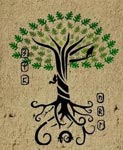
"Yggdrasil - In Norse mythology, Yggdrasil is an immense tree that is central in Norse cosmology; the world tree, and around the tree existed nine worlds. It is generally considered to mean "Ygg's (Odin's) horse". Yggdrasil is an immense ash tree that is central and considered very holy."
I could adapt this symbol also into another character perhaps using this description? Or maybe interlink the two ideas?
Adaptation A: Updated Script and Storyboard

*Title screen* - Science of Snowmen.
-Making a snowman is no easy task and we have all had that experience of making one after Christmas time but they never turn out quite right, either being too big. Too small. Yellow or just a big ball of..hmm.. lets say, mush.
- Understanding the science of snowmen will lead you to having the.. 'perfect' snowman.
- You may need a pen and paper ready.
-First of
all make sure that your thermostat is set down enough to make it snow
outside. Wait about an hour until you have approximately 50kg of snow
in a cylindrical fashion.
- Stage 2
-pack the compact liquidum forming three sized viburnums with n exact 2/3 ratio making sure each one is perfectly cylindrical.
Stage 3
- place these carefully on top of each other with the larger one the bottom to support the mass of the snowman.
-Now lets take a closer look and fill in the missing units... ah yes the arms.
-Find some
medium sized (approximately 60cm) ramulis' and fastening them into the
side of your snowman stabling it for any weather condition it may
encounter. Without these it may topple and become a noman.
Stage 4
-Now with
everything in place find some pebbles for the eyes, buttons and mouth of the
snowman, place them into a saucepan of boiling water and heat them up for 30seconds cause them to calface. fix these onto the snowman from top to bottom ensuring each one is deep enough to penetrate the snowman.
- When you are ready you need to find a amictorium and place it over your snowman.
-Fasten the nodum within your amictorium and your snowman is almost complete.
Stage 5
-With your snowman almost there just leave it out to settle overnight.
- If you
have followed these steps correctly, carefully trained sewing ants have been
trained to search for these snowmen to attach the final garnet.
-They each carry a piece of material to form the hat on top.
- after a long nights work the ants go home rest until the next night when they go looking for over another snowmen to finish, thanks ants.
-Thants.
-The science of snowmen. 

Adaptation A: Intial Illustrations


These are my inital illustrations for my info graphic. I think I am going to redo them in my of an illustrated way with block colours keeping them simple and using my updated storyboard. Although I want to keep a blueprint style to my work also integrating a style of it done on a chalk board aswell therefore I might go into the outline approach for my work rather than the illustrative work.
Monday, 19 January 2015
Adaptation A: Font Styles

Adaptation A: On Screen Graphic Styles

For my infographic I want to do a graphic style with block colours like the Santa holding the bag, but then in combination with the script and the scientific diagrams below this could lead to an interesting infographic about building a snowman. I looked into GCSE math and science diagrams and I will use this to back up the science of making the snowman to make it more believable that there is a science to building a snowman.

Friday, 16 January 2015
Adaptation Part A: First Script
Here in the script is something along the lines that I want to go with, by using latin words it will make it sound a lot more scientific.
*Title screen* - Science of Snowmen.
-Making a snowman is no easy task and we have all had that experience of making one after Christmas time but they never turn out quite right, either being too big. Too small. Yellow or just a big ball of..hmm.. lets say, mush.
- Understanding the science of snowmen will lead you to having the.. 'perfect' snowman.
- You may need a pen and paper ready.
-First of all make sure that your thermostat is set down enough to make it snow outside. Wait about an hour until you have approximately 50kg of snow in a cylindrical fashion.
- Stage 2
-pack the compact liquidum forming three sized viburnums with the lower one slightly larger than the other two.
- give these about an hour to freeze to stop any bumps forming within your viburnums.
Stage 3
-With all these now frozen, place each viburnum on top of each other with the larger one the bottom.
-Now the base of your snowman is complete its time to move onto the details of the assembling.
-Find some medium sized (approximately 60cm) ramulis' and fastening them into the side of your snowman stabling it for any weather condition it may encounter. Without these it may topple and become a noman.
Stage 4
-Now with everything in place find some pebbles for the eyes and buttons of the snowman, place them onto the snowman on the stomach and the head causing liquescens fixing them onto the snowman.
- When you are ready and you think your snowman is stable enough you need to find a amictorium and place it over your snowman.
-Fasten the nodum within your amictorium and your snowman is almost complete.
Stage 5
-With your snowman almost there just leave it out to thor overnight.
- If you have followed these steps correctly, carefully trained ants have been trained to search for these snowmen to put the final touch on.
-They each carry a piece of material to form the hat on top.
- after a long night working the ants rest looking for over perfect snowmen thanks ants.
-Thants.
-Now that you understand the science of a snowman you can go away and build your own.
Thursday, 15 January 2015
Adaptation Part A: Info graphic Style Inspiration
Here are some infographics that I have looked at for my graphic language and style of animation that I want to produce at the end of the project. Although Look Around You was a slow paced TV program and infographics are usually fast and snappy I have to mix and match the two styles for my infographic. #
With this infographic I liked the way that it uses the roundness of the world and how it cycles around I was thinking of applying this logic to snowmen and the roundness of them.
Making Tea from Gonçalo Leite on Vimeo.
With this infographic I liked the way that it uses the roundness of the world and how it cycles around I was thinking of applying this logic to snowmen and the roundness of them.
Making Tea from Gonçalo Leite on Vimeo.
Adaptation Part A: Science of.... Snowmen
For adaptation part A I was given the Science of...
'Look Around You' was a TV program that took the mick out of science and made it comical, I want to use the same effect within the science of a snowman and making it a serious procedure within my info graphic.
With this in mind I have looked into Pseudoscience which is a ''belief or practice which is falsely presented as scientific.'' Therefore I can make building a snowman into something that is presented as scientific when actual fact its nothing but building a simple snowman. To make building a snowman look and sound more interesting I will be converting the sayings into Latin, these are some of the senteces that will within my info graphic:
from the list that I produced for the presentation I have decided to go with the science of snowmen and how to build the 'perfect' snowman.
'Look Around You' was a TV program that took the mick out of science and made it comical, I want to use the same effect within the science of a snowman and making it a serious procedure within my info graphic.
With this in mind I have looked into Pseudoscience which is a ''belief or practice which is falsely presented as scientific.'' Therefore I can make building a snowman into something that is presented as scientific when actual fact its nothing but building a simple snowman. To make building a snowman look and sound more interesting I will be converting the sayings into Latin, these are some of the senteces that will within my info graphic:
- fastening the knot - adfixae the nodum
- Place the carrot at 90 to the head - Place the daucus carota at 90 gradus to the head
- Pack the snow - pack the compact liquidum
- Sticks - ramulis
- Scarf - amictorium
- Pebbles - Pebbles
Friday, 9 January 2015
Adaptation A: The Science of....
The Science of....

- Bubbles
- Dreams
- Spring
- War
- Light
- Balloons
- Escaping
- Bubblegum
- Fruit
- Cold/Heat
- Travel
- Movement
- Rhythm
- Energy
- Fear
- The Unknown
- Bear Hunting
- Fishing
- Snowmen
- Spirits
- The Woods
- Imagination
- Emotion
Subscribe to:
Posts (Atom)